

What is an API?
Published: April 28, 2026
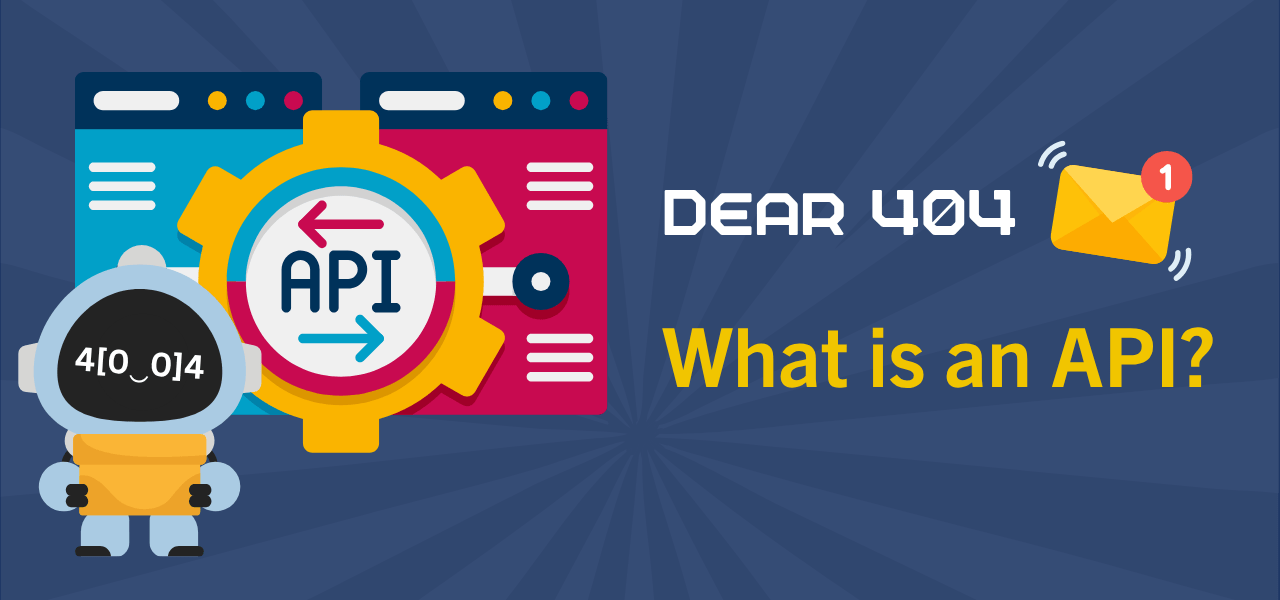

Dear 404,
I’m a PM and I keep hearing “API” in meetings, but I’m too embarrassed to ask what it actually means. Can you explain it in plain English?
— Acronym-Avoider
Dear Acronym-Avoider,
First of all — welcome to the club. “API” is one of those terms everyone nods at in meetings like it’s obvious… while quietly hoping no one asks them to define it.
Let’s fix that.
What is an API (in plain English)?
An API (Application Programming Interface) is just a way for two systems to talk to each other and exchange information.
Think of it like a waiter at a restaurant:

You (the user or system) place an order

The waiter (the API) takes your request to the kitchen

The kitchen (the system/service) prepares it

The waiter brings the result back to you
What does that look like at work?
APIs are everywhere:
Your app pulls data from another system → API

A dashboard shows real-time data → API
A vendor tool connects to your internal system → API
If systems are “integrated,” there’s almost always an API doing the heavy lifting behind the scenes.
APIs matter because they decide how systems connect, and what data moves.
A few questions to help you figure out what’s actually going on behind the scenes:
The bottom line
APIs are the connectors that make modern systems work together.
Understanding them helps you avoid surprises, delays, and — most importantly — confusion about how data actually flows.
Ask the question. No one knows everything in those meetings anyway.
Sincerely,
4[0‿0]4